

MacOS Installation
The QuFabric client (agent) allows a peer to join a pre-existing QuFabric deployment. If a QuFabric deployment is not yet available, there are both managed and self-hosted options available.
Install with one command
curl -fsSL https://pkgs.qufabric.io/install.sh | sh
Package install
- Download the latest MacOS release installer for your processor:
- Intel: Download QuFabric for Intel
- M1 & M2: Download QuFabric for Apple Silicon
If you require an older version checkout QuFabric releases
- Proceed with the installation steps
- This will install the QuFabric app into /Applications and add the daemon service
- After installing, you can follow the steps from Running QuFabric with SSO Login steps.
To uninstall the client remove the app from /Applications
Homebrew install
- Download and install homebrew at https://brew.sh/
- If qufabric was previously installed with homebrew, you will need to run:
# Stop and uninstall daemon service:
sudo qufabric service stop
sudo qufabric service uninstall
# unlink the app
brew unlink qufabric
qufabric will copy any existing configuration from the qufabric's default configuration paths to the new QuFabric's default location
- Install the client
  # for CLI only
  brew install qufabric/tap/qufabric
  # for GUI package
  brew install --cask qufabric/tap/qufabric-ui
- If you installed CLI only, you need to install and start the client daemon service:
 sudo qufabric service install
 sudo qufabric service start
Binary Install
Installation from binary (CLI only)
- Checkout QuFabric releases
- Download the latest release:
curl -L -o ./qufabric_<VERSION>.tar.gz https://github.com/qufabric/qufabric/releases/download/v<VERSION>/qufabric_<VERSION>_<OS>_<Arch>.tar.gz
You need to replace some variables from the URL above:
- Replace VERSION with the latest released version.
- Replace OS with "linux", "darwin" for MacOS or "windows"
- Replace Arch with your target system CPU architecture
- Decompress
  tar xzf ./qufabric_<VERSION>.tar.gz
  sudo mv qufabric /usr/bin/qufabric
  sudo chown root:root /usr/bin/qufabric
  sudo chmod +x /usr/bin/qufabric
After that you may need to add /usr/bin in your PATH environment variable:
export PATH=$PATH:/usr/bin
- Install and run the service
  sudo qufabric service install
  sudo qufabric service start
Running QuFabric with SSO Login
Desktop UI Application
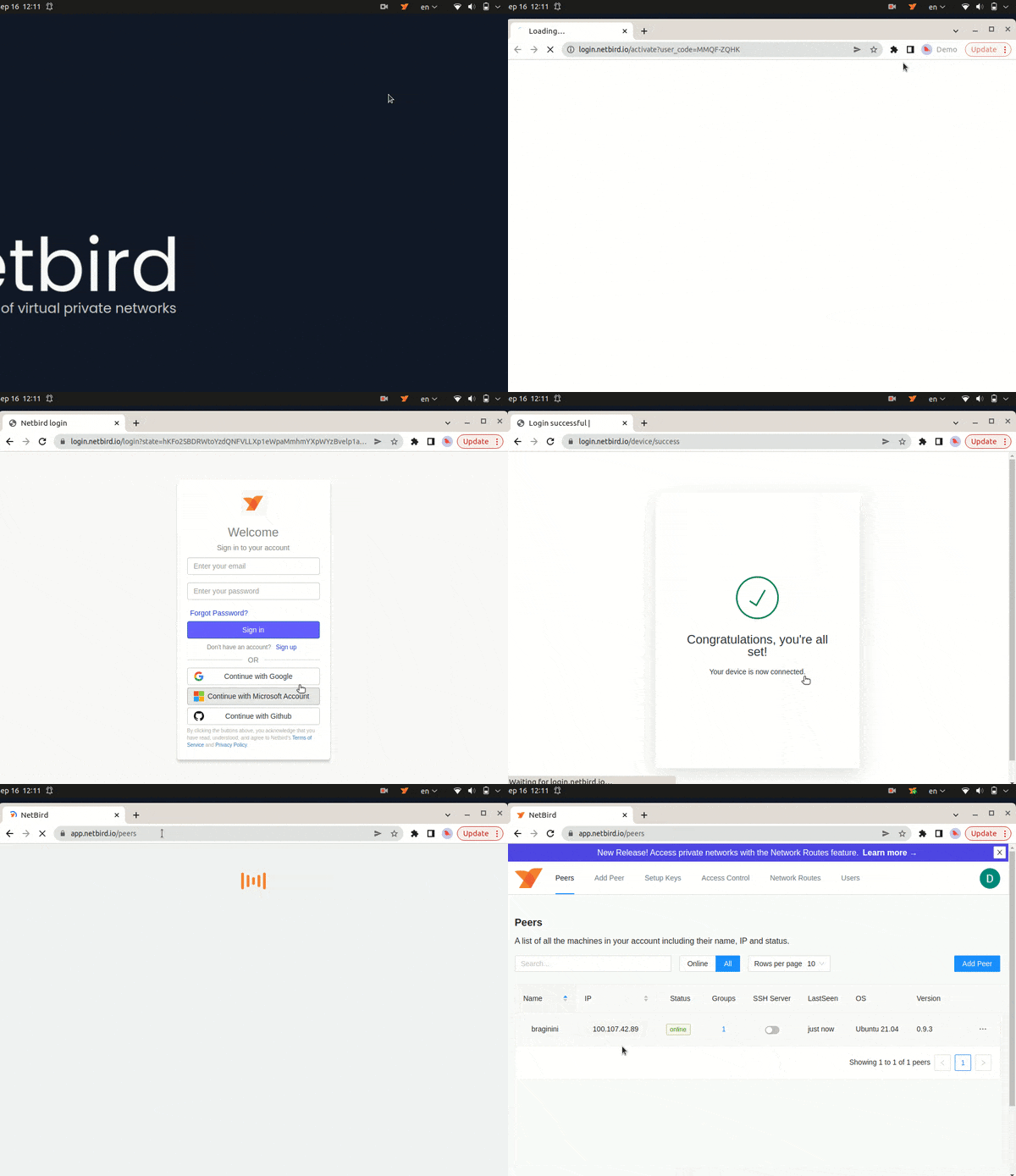
If you installed the Desktop UI client, you can launch it and click on Connect.
It will open your browser, and you will be prompt for email and password. Follow the instructions.
CLI
Alternatively, you could use command line. Simply run
qufabric up
It will open your browser, and you will be prompt for email and password. Follow the instructions.
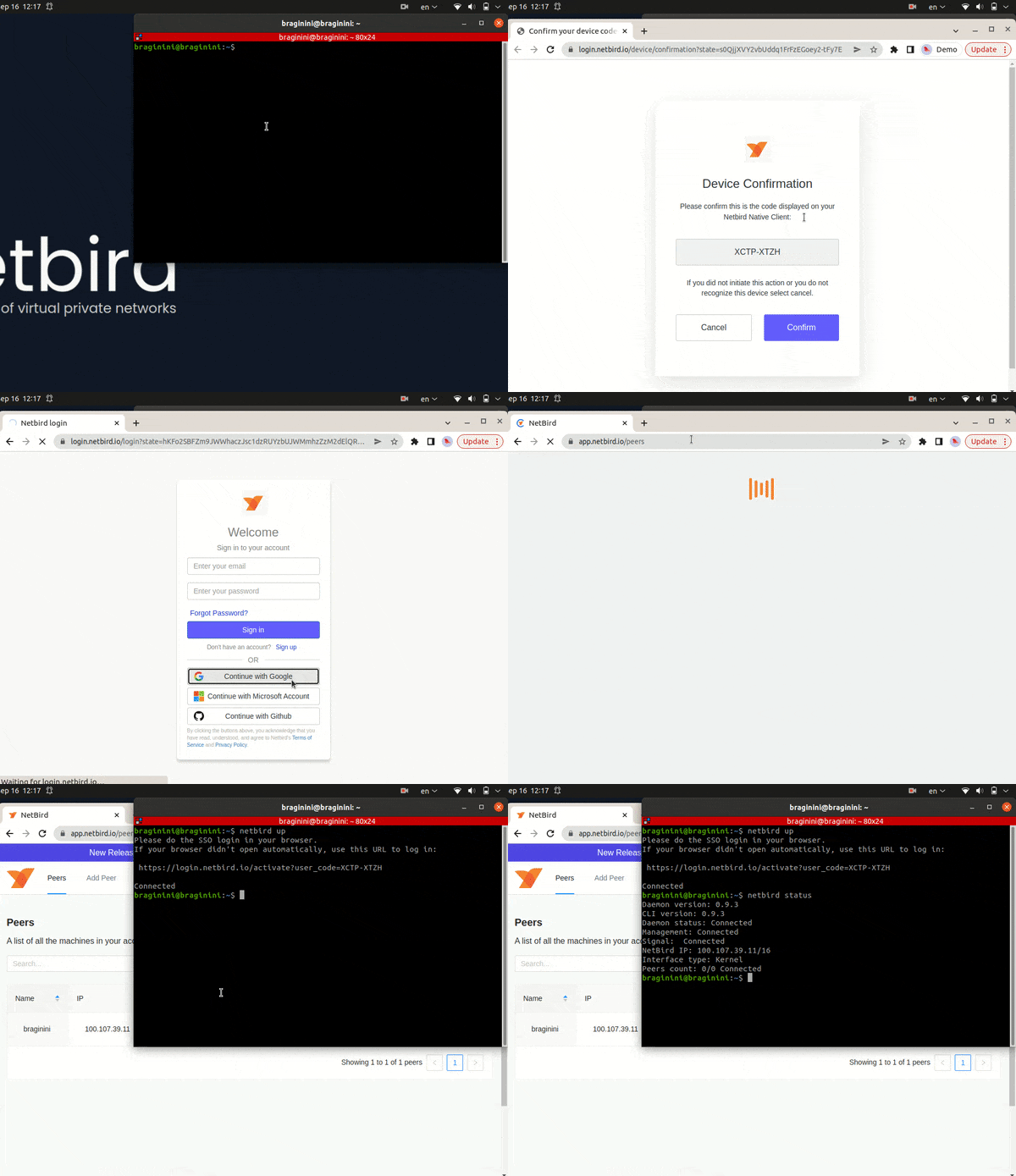
Check connection status:
qufabric status
Running QuFabric with a Setup Key
In case you are activating a server peer, you can use a setup key as described in the steps below.
This is especially helpful when you are running multiple server instances with infrastructure-as-code tools like ansible and terraform.
- Login to the Management Service. You need to have a
setup keyin hand (see setup keys).
qufabric up --setup-key <SETUP KEY>
Alternatively, if you are hosting your own Management Service provide --management-url property pointing to your Management Service:
qufabric up --setup-key <SETUP KEY> --management-url http://localhost:33073
You could also omit the
--setup-keyproperty. In this case, the tool will prompt for the key.
- Check connection status:
qufabric status
- Check your IP:
sudo ifconfig utun100